
Blogs
Merle Genetics – A Complete, Easy-to-Understand Guide for Dog Breeders

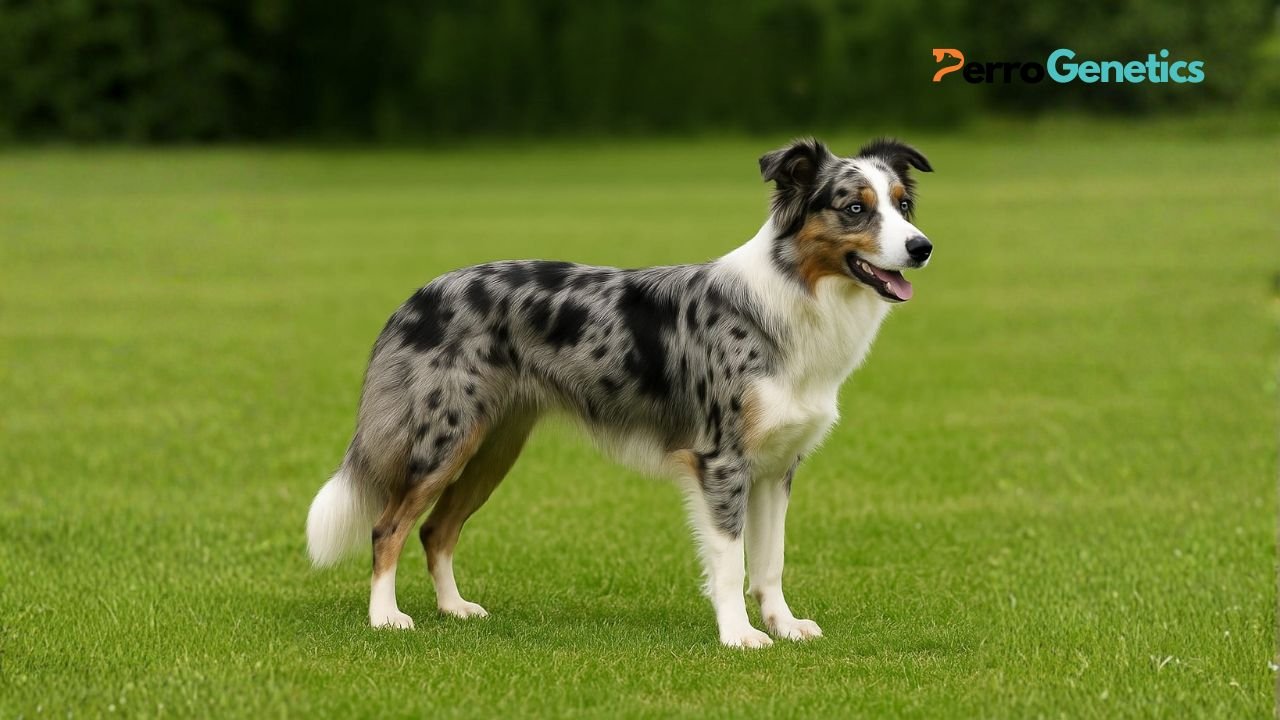
The merle pattern is one of the most well-known and most complex colour patterns in the canine world. While many people love it for its unique appearance, its genetic background is far more complicated than a simple colour effect. Merle is a genetic variant containing a SINE insertion, and the appearance of the pattern is determined by the length of the polyA tail. The longer the polyA region, the stronger the pigment dilution and the more visible the merle effect.
The merle allele series consists of several types, each producing different levels of pigmentation, pattern variation, and health risks. Without proper genetic testing, it is often impossible to determine whether a dog is merle, as many variants produce no visible pattern.
This article explains all major M-locus variants and the safe versus dangerous allele combinations — thoroughly, but in an accessible way.
The M-locus and the Role of the polyA Length
The different merle types are based on the length of the polyA segment. The following alleles exist:
- m – non-merle (200–230 bp)
- Mc – cryptic merle (upper range of 200–230 bp)
- Mc+ – extended cryptic (231–246 bp)
- Ma – atypical merle (247–254 bp)
- Ma+ – atypical merle (255–264 bp)
- M – classic merle (265–268 bp)
- Mh – harlequin/super merle (269+ bp)
As the polyA tail becomes longer, pigment dilution increases and the merle pattern becomes more prominent.
Detailed Description of Each Merle Variant
1. m – non-merle (200–230 bp)
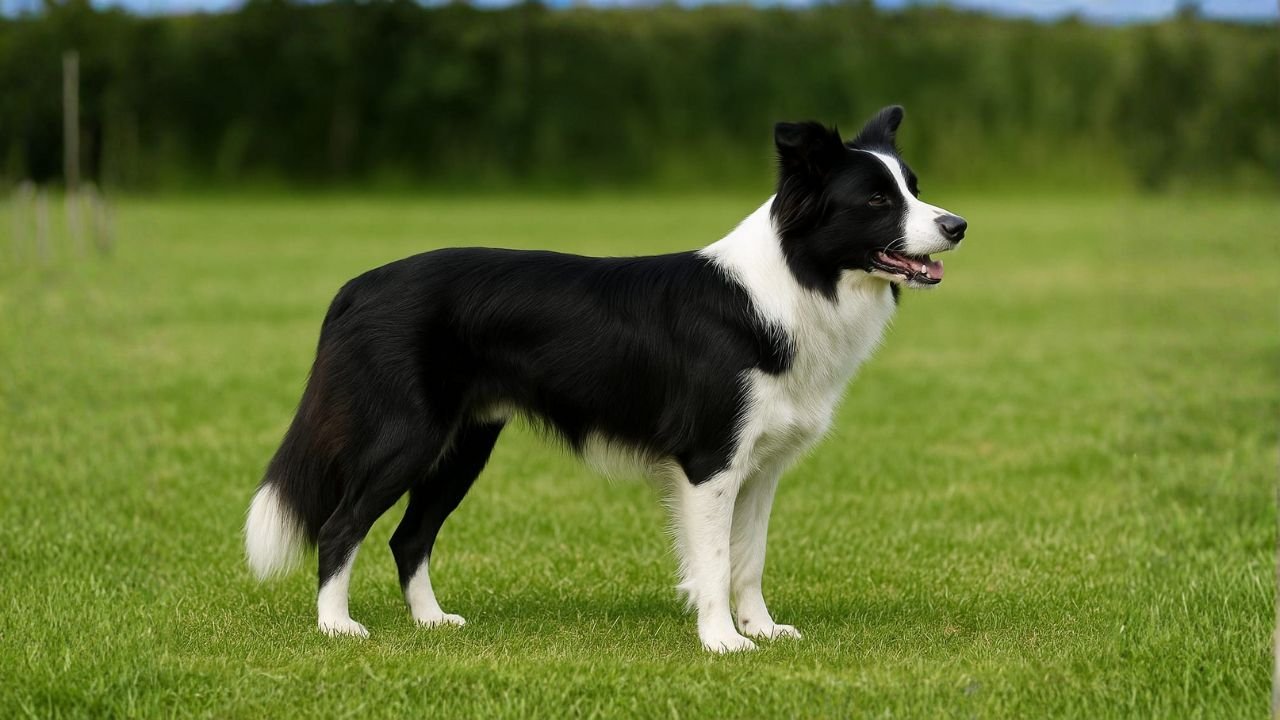
Non-merle (m/m): no merle variant present.
- the dog shows no merle pattern and does not carry the merle gene
- safe to pair with merle dogs, as it cannot pass on any merle allele
2. Mc – cryptic merle (200–230 bp)
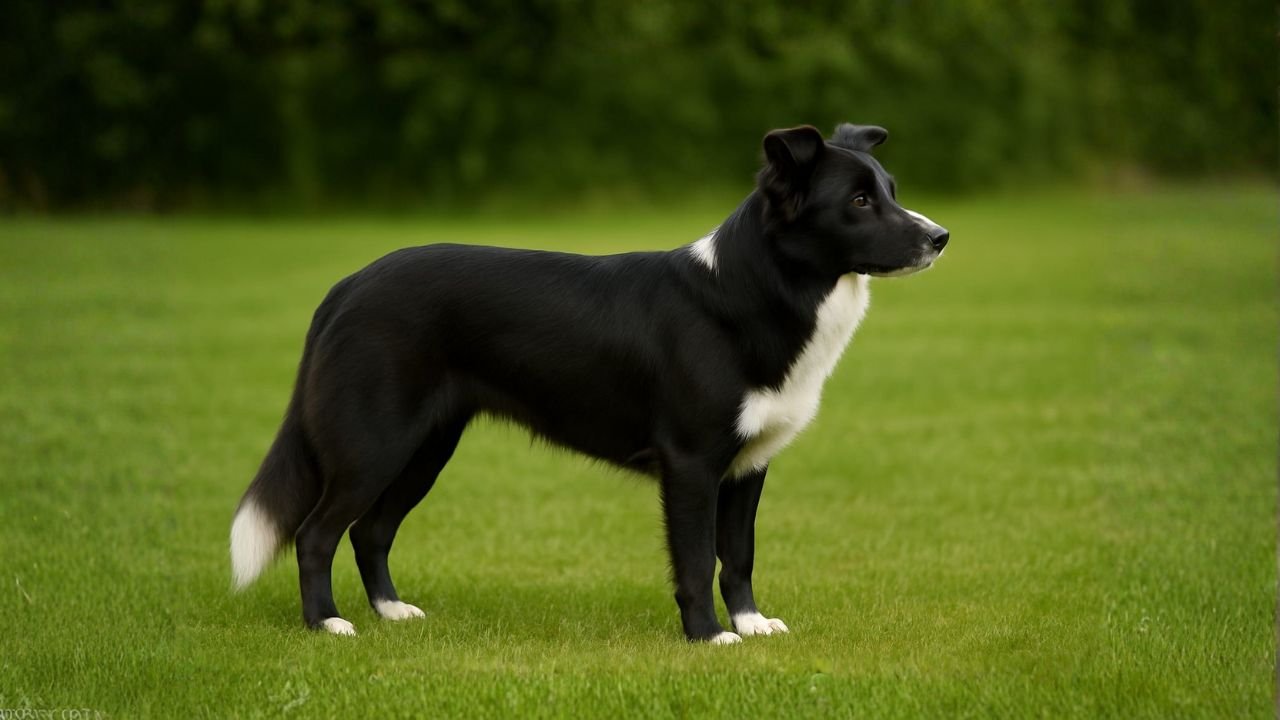
Cryptic merle usually shows no visible merle pattern. Possible features include:
- very slight shading
- minimal pigment dilution
- completely normal-looking coat
3. Mc+ – extended cryptic merle (231–246 bp)
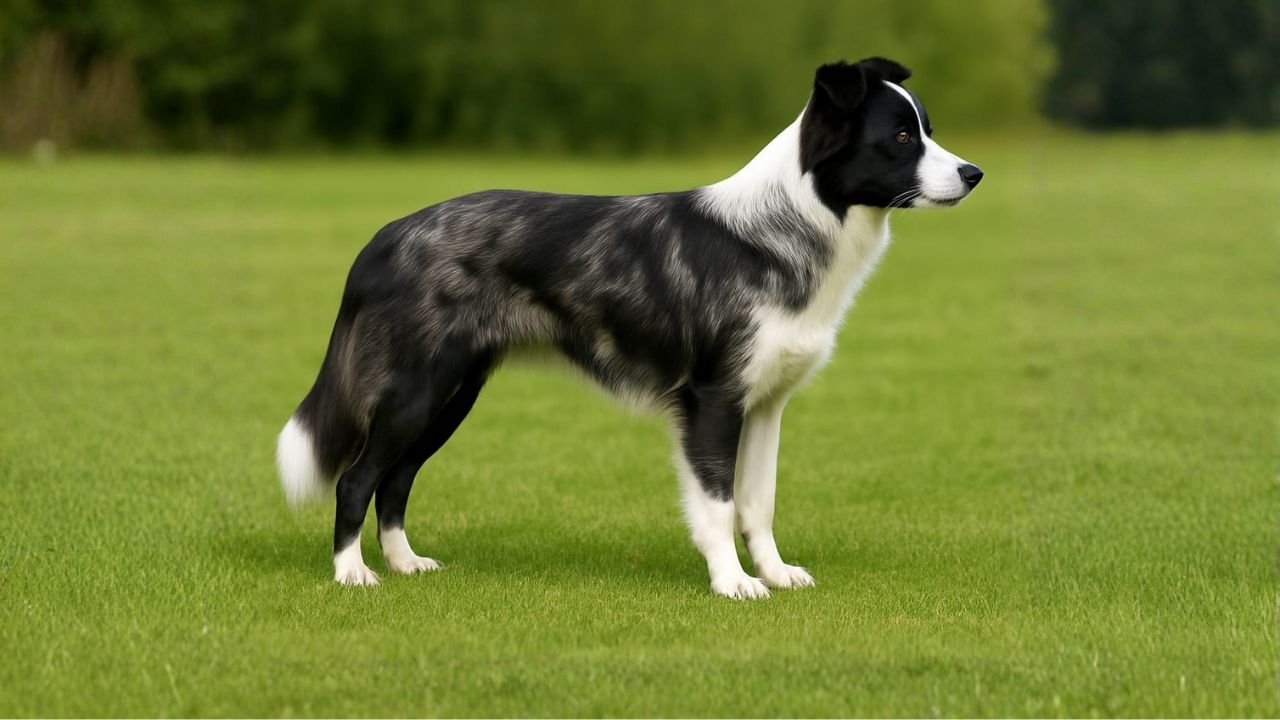
Mc+ contains a longer polyA tail, causing a stronger yet still subtle merle effect.
Appearance may include:
- faint shades
- small pigment variances
- occasional tiny patches
Due to the longer polyA region, Mc+ can cause pigment deletion, making combinations like Mc+/M or Mc+/Mh potentially risky.
4. Ma – atypical merle (247–254 bp)
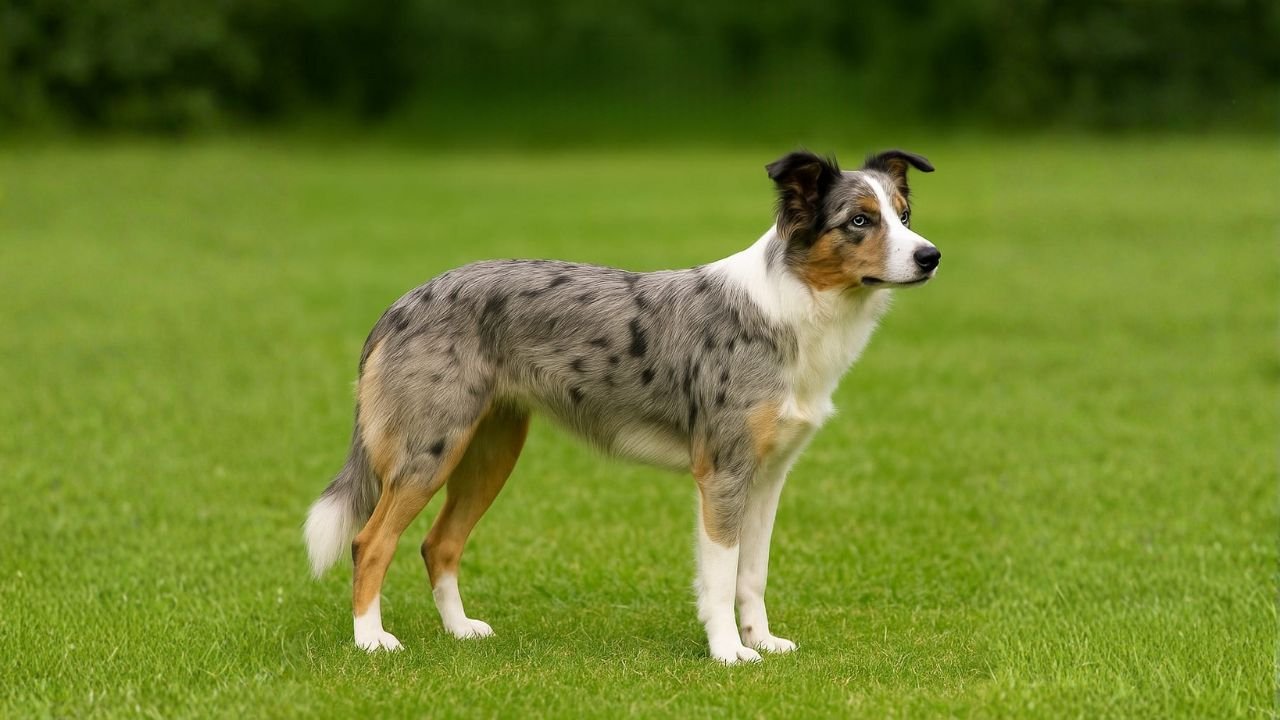
Ma may already show visible merle effects. The coat may:
- appear diluted or have a brownish tint
- show lighter undercoat
- contain mild merle patches
- present blue eyes
In Ma/Ma dogs, small dark spots can appear on a lighter background.
Ma can produce white markings when combined with longer polyA alleles.
5. Ma+ – atypical merle + (255–264 bp)
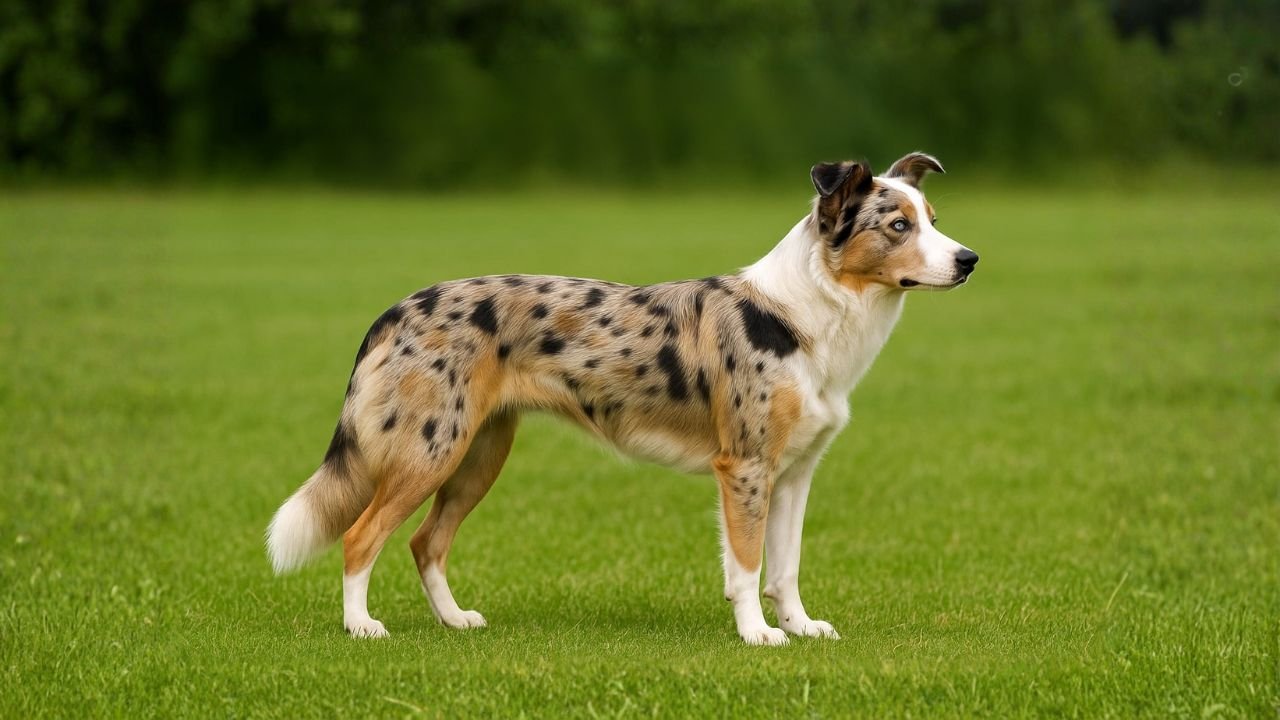
Ma+ intensifies the dilution effect. Common traits:
- diluted or brownish coat
- small dark spots
- partial pigment loss
- tweed pattern (large uniform light patches)
Several Ma+ combinations become high-risk when paired with M or Mh.
6. M – classic merle (265–268 bp)
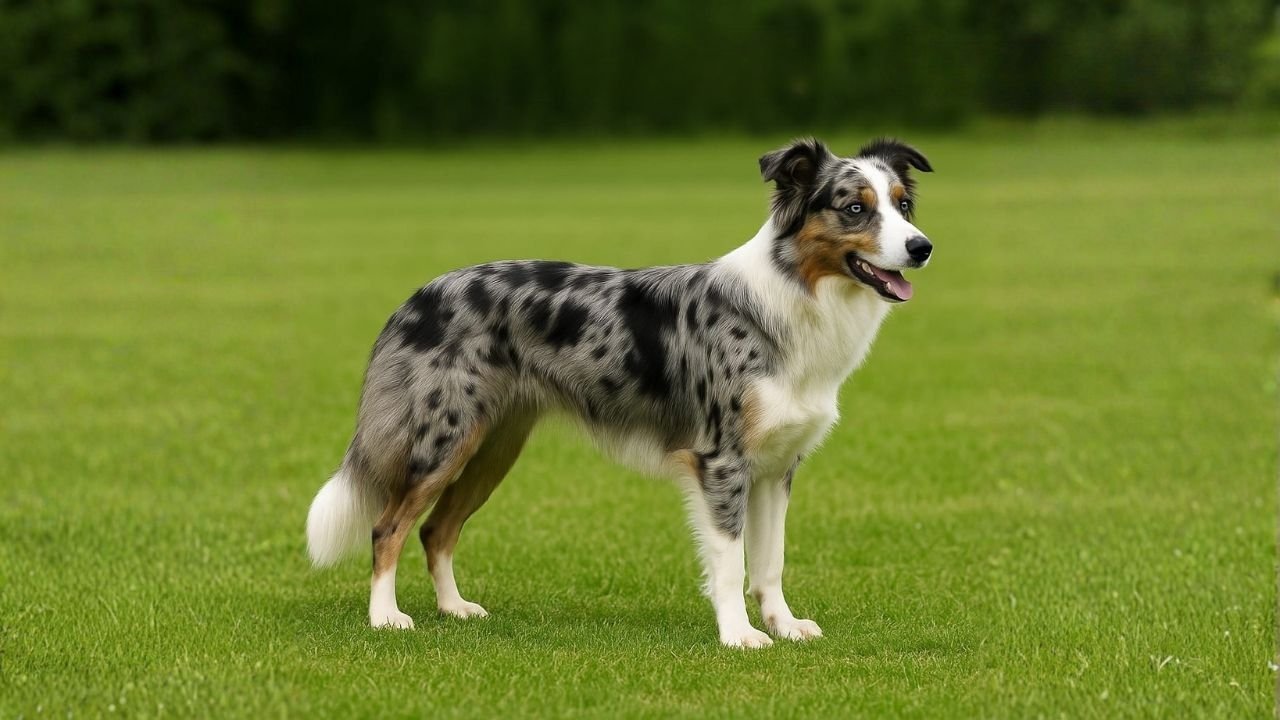
The typical merle pattern. The coat displays:
- alternating diluted and fully pigmented areas
- classic merle blotching
- possible blue eyes
Particularly strong patterns occur in:
- Mc/M
- Mc+/M
- Ma/M
- Ma+/M
- M/M (double merle)
Some combinations may also produce tweed effects.
7.Mh – harlequin/super merle (269+ bp)
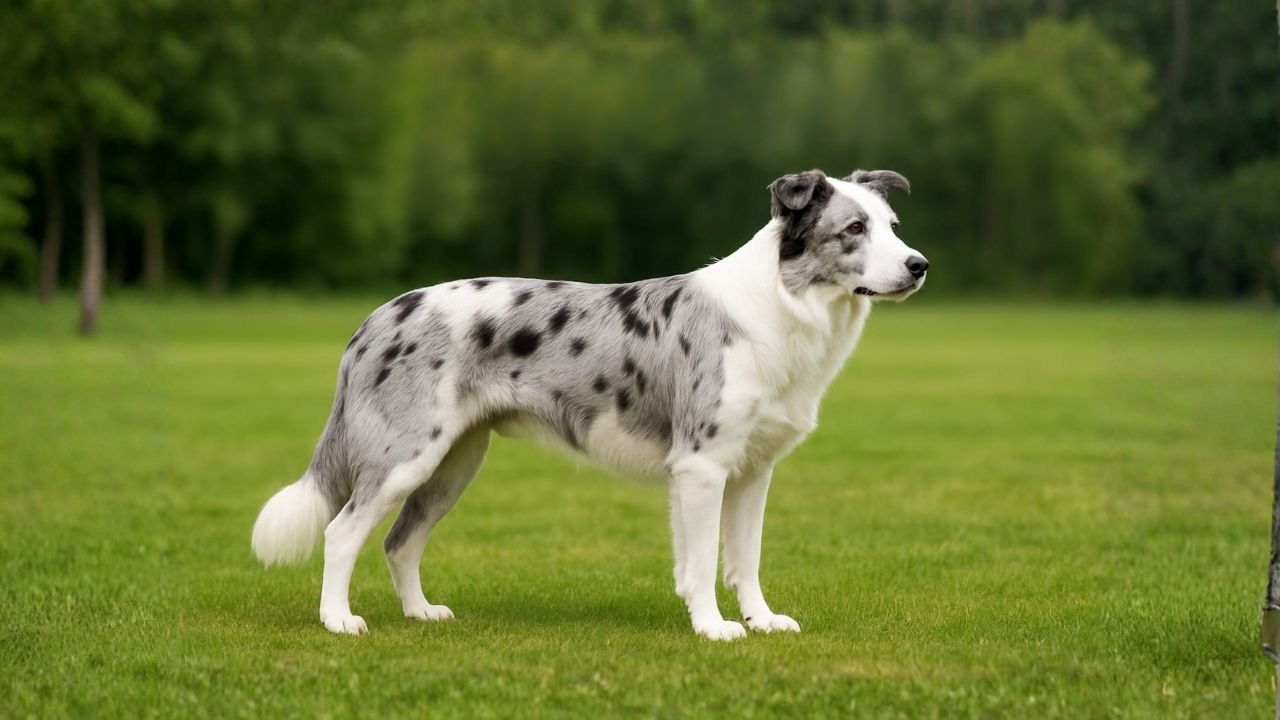
Mh is one of the strongest merle variants, with highly variable expression.
Typical appearances:
- minimal merle (only slight markings)
- merle only on head, legs, shoulders
- shepherd-harlequin (large white/light grey areas)
- heavy pigment deletion
- blue eyes are common
Due to strong dilution, Mh must never be paired with M, Ma or another Mh.
Dangerous Merle Combinations
Double merle or certain long-polyA combinations can cause severe health problems.
Most common risks:
- hearing loss
- vision impairment
- microphthalmia
- pigment-related sensitivity
A total of 14 allele combinations can cause full pigment deletion (white areas).
Among these, 8 combinations frequently cause disability:
- M/M
- m/Mh
- Mc/Mh
- Mc+/Mh
- Ma/Mh
- Ma+/Mh
- M/Mh
- Mh/Mh
Long-polyA alleles (M, Mh) inherited together pose the highest risk.
Safe and Risky Merle Pairings
- S (safe) – no pigment deletion
- LR (low risk) – slight pigment loss may occur
- MR (medium risk) – possible vision/hearing issues
- HR (high risk) – high chance of severe disability
Core rule for breeders:
A dog carrying a merle allele must never be bred to another dog with an M or Mh (long polyA) allele.
This is especially true for Ma+, M and Mh combinations.
Merle Mosaicism
Merle mosaic dogs carry two or more different merle alleles in their body. This happens when:
- during early embryonic development
- the polyA tail changes in one cell
- and this new merle allele continues to divide
Results:
- unexpected patterns
- unclassifiable merle types
- up to 2–3 different alleles in the same dog
Important considerations:
- mosaic alleles can be passed on to offspring
- allele ratios vary depending on sample type (buccal swab vs. semen)
Therefore, breeding decisions involving mosaic dogs require special caution.
Is Breeding Merle Dogs Dangerous?
Merle is not dangerous by itself, but breeding a merle carrier with another merle is.
Long polyA variants (M and Mh) can cause severe problems in double form, such as:
- hearing impairment
- vision loss
- microphthalmia
- extensive pigment deletion
Safe breeding requires:
- genetic merle testing for every breeding dog, and
- pairing merle carriers only with non-merle (m/m) partners.
This prevents high-risk combinations like M/M, Mh/Mh, or M/Mh.
Without testing, merle breeding is risky because many variants (Mc, Mc+, Ma, Ma+) are not visible at all — only DNA testing can detect them.
Summary
Merle genetics are complex, involving many alleles and countless combinations.
The strength of the pattern depends on the polyA length, and different variants influence pigment in different ways.
A merle genetic test helps to:
- identify the merle variant
- show the risk level of combinations
- avoid high-risk pairings that cause health issues
- support responsible breeding
Understanding merle inheritance is essential for breeders, especially in breeds where M-locus variants are common.