
Blogs
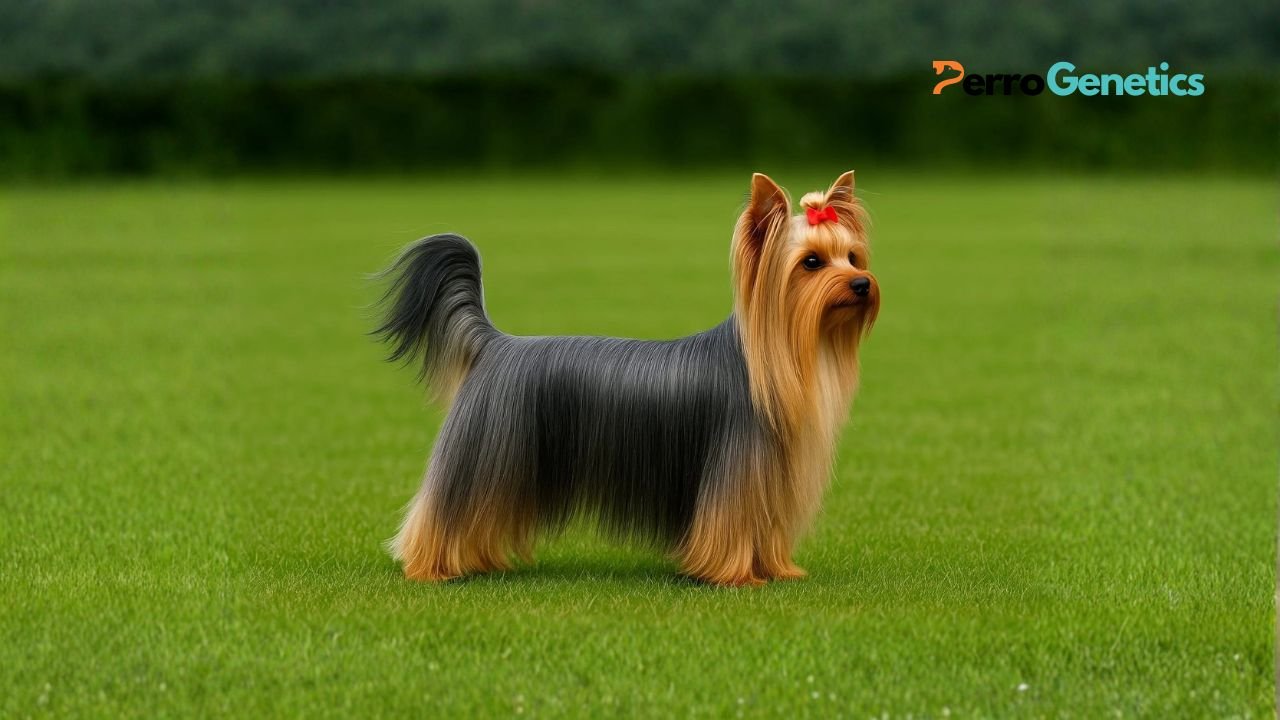
Yorkshire Terrier – A miniature charm with a big heart

Introduction to the Yorkshire Terrier
The Yorkshire Terrier — or simply Yorkie — is one of the world’s most beloved small dog breeds.
Despite its tiny size, the Yorkie is energetic, clever, lively, and surprisingly confident. Its elegant appearance and affectionate nature make it a popular family companion across the globe.
Breed History: A little working dog from the heart of Yorkshire
The Yorkshire Terrier originates from the northern regions of England, specifically Yorkshire and Lancashire.
The breed developed in the 19th century when Scottish workers brought their small terriers to England’s industrial towns.
Early Yorkies were kept for:
- controlling rats in mines and factories
- protecting textiles from pests in weaving mills
- small hunting tasks around homes
Although known today as a refined companion dog, the Yorkie began life as a brave, quick, and determined little working terrier.
The Yorkshire Terrier’s temperament
A Yorkie’s personality is much bigger than its body:
- Affectionate and loyal – forms strong bonds with its owner.
- Highly intelligent – learns quickly and is easy to motivate.
- Bold and confident – often behaves like a much larger dog.
- Excellent watchdog – responds to every sound and protects the home.
- Playful and cheerful – a wonderful family companion.
A Yorkie is elegant, spirited, self-assured, and loving — a true little character full of charm.
Coat Colours and Genetic Variations in the Breed
Linked to the A–B–D–E–I–K–M–S loci
1. Steel Blue & Tan – the standard Yorkshire Terrier colour
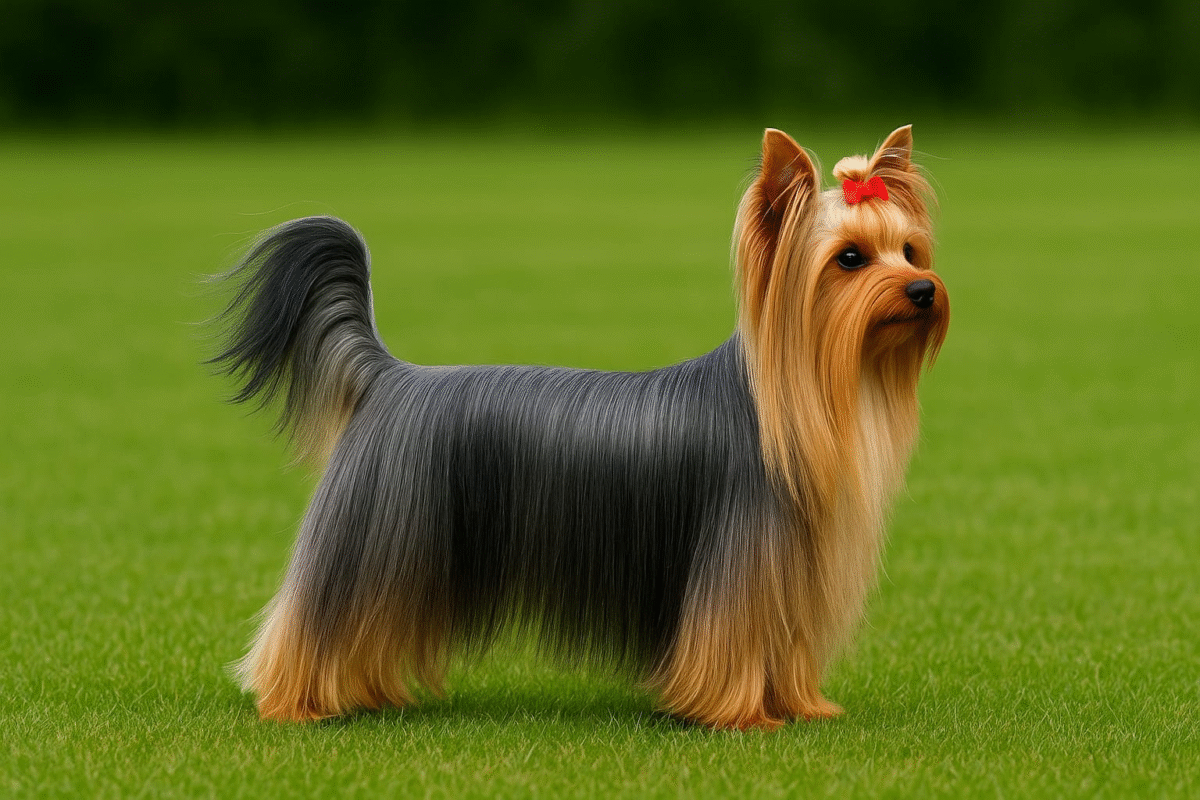
The classic, officially recognised Yorkie colour. Puppies are born black and gradually develop the steel blue adult coat with tan markings.
2. Black and Tan – Locus A (Agouti)
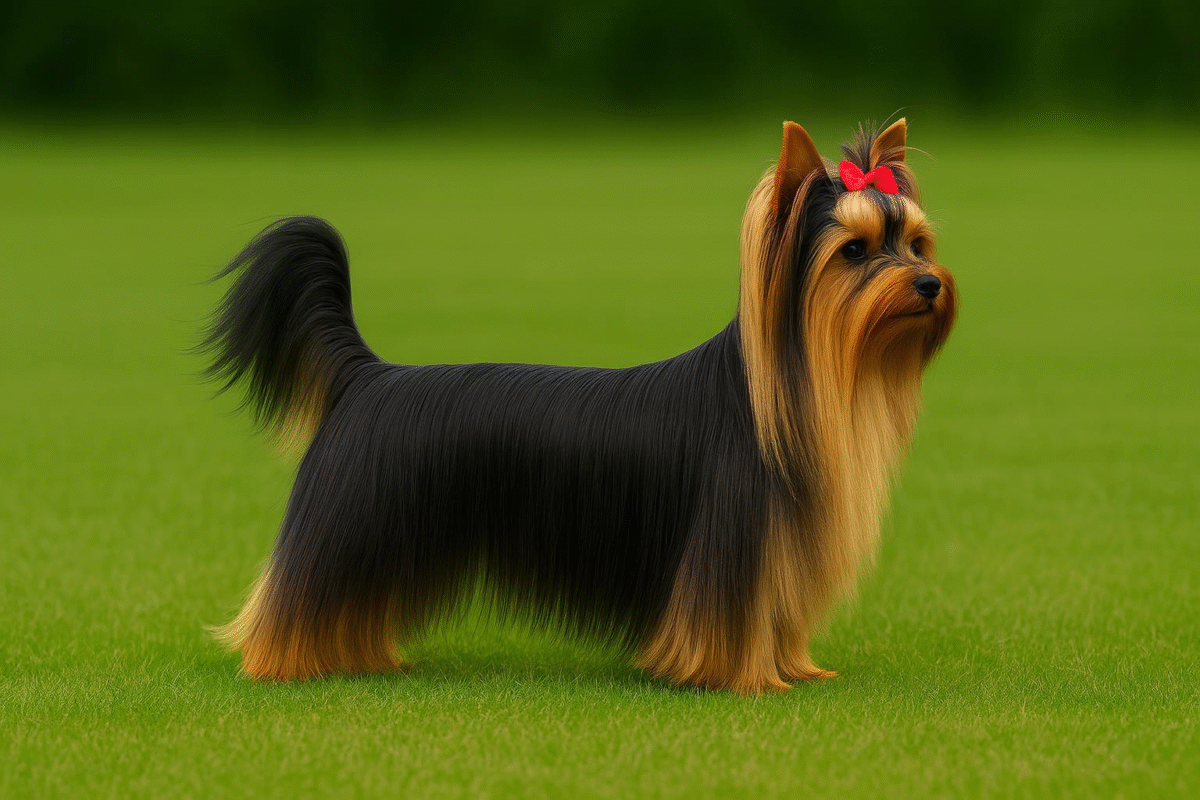
Black base coat with tan points, which may remain into adulthood. Controlled by the A-locus.
3. Chocolate – Locus B (Brown)
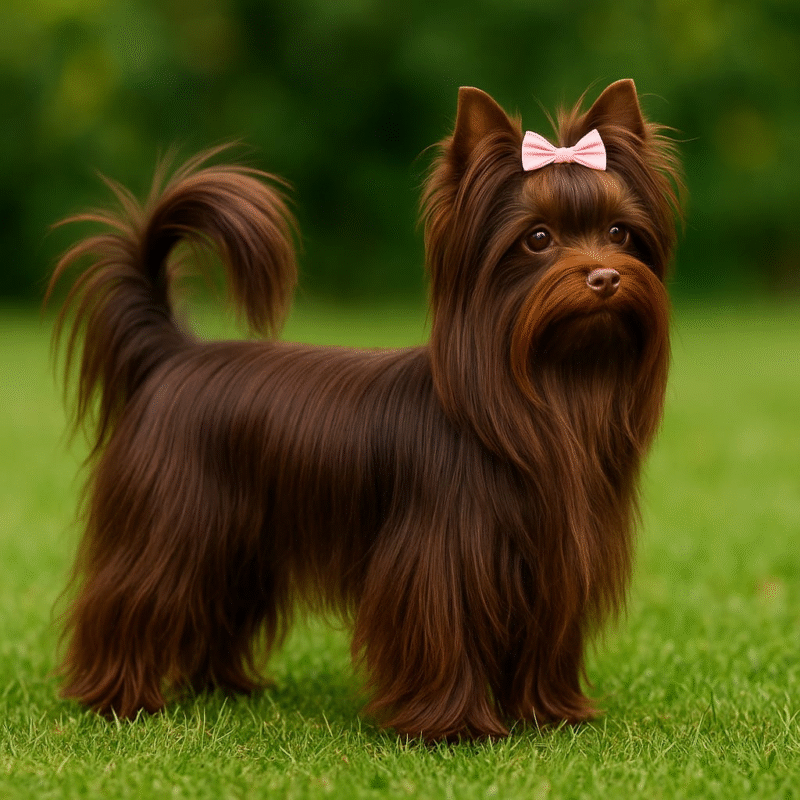
Caused by recessive variants (bs, bc, bd). These dogs have brown coats, brown noses, and brown pigmentation.
4. Lilac – Locus D (Dilution) + Locus B (Brown)
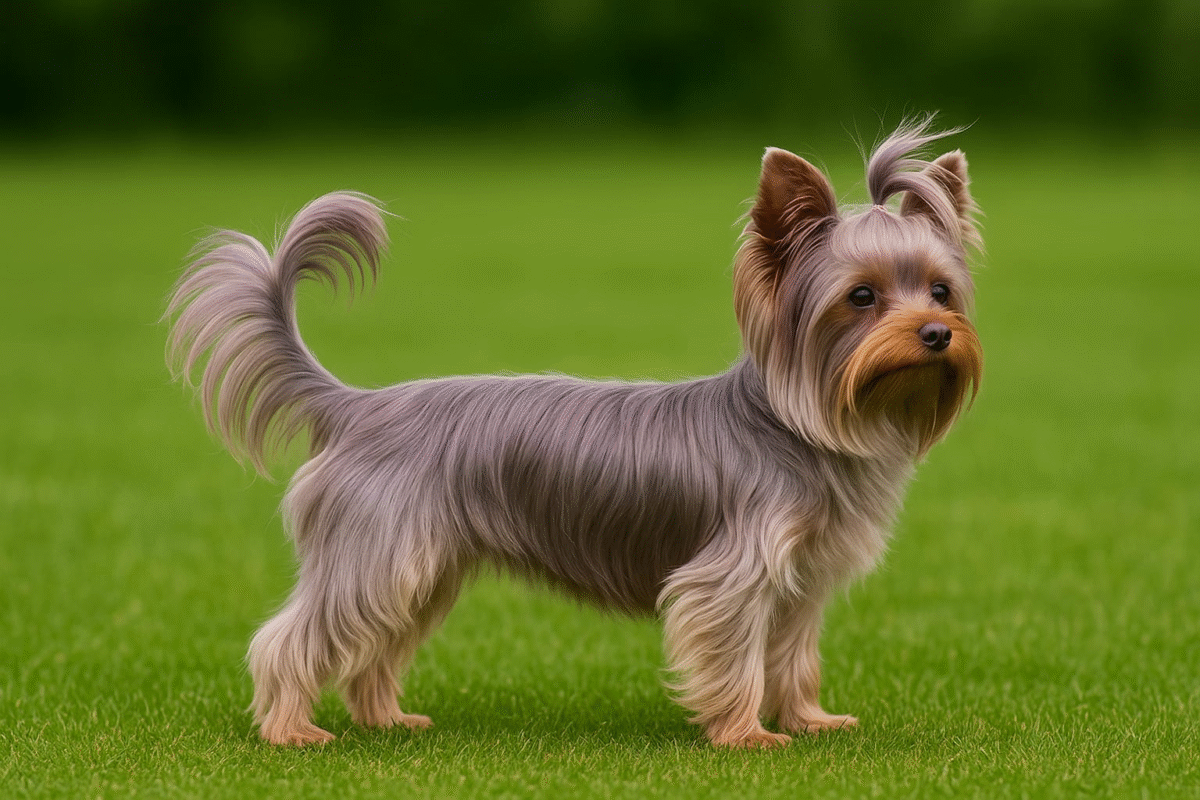
A combination of dd (diluted) and bb (brown). Produces a rare, soft greyish-brown “lilac” tone.
5. Cream – Locus E (Recessive Red – e/e)
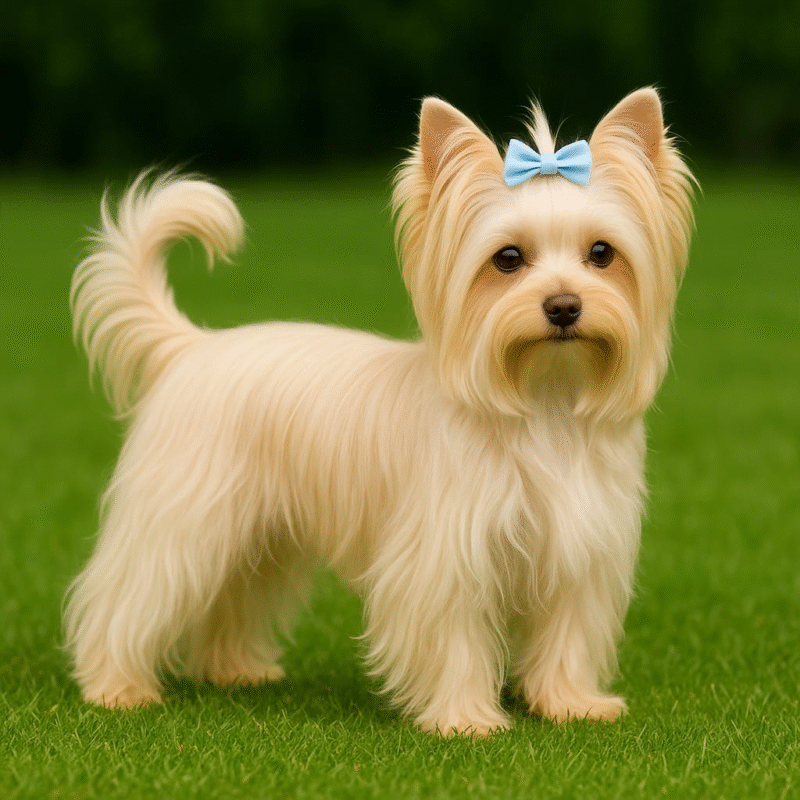
The recessive red allele suppresses black pigment production. Results in cream, pale yellow, or light red shades.
6. Blonde / Gold – Locus I (Intensity)
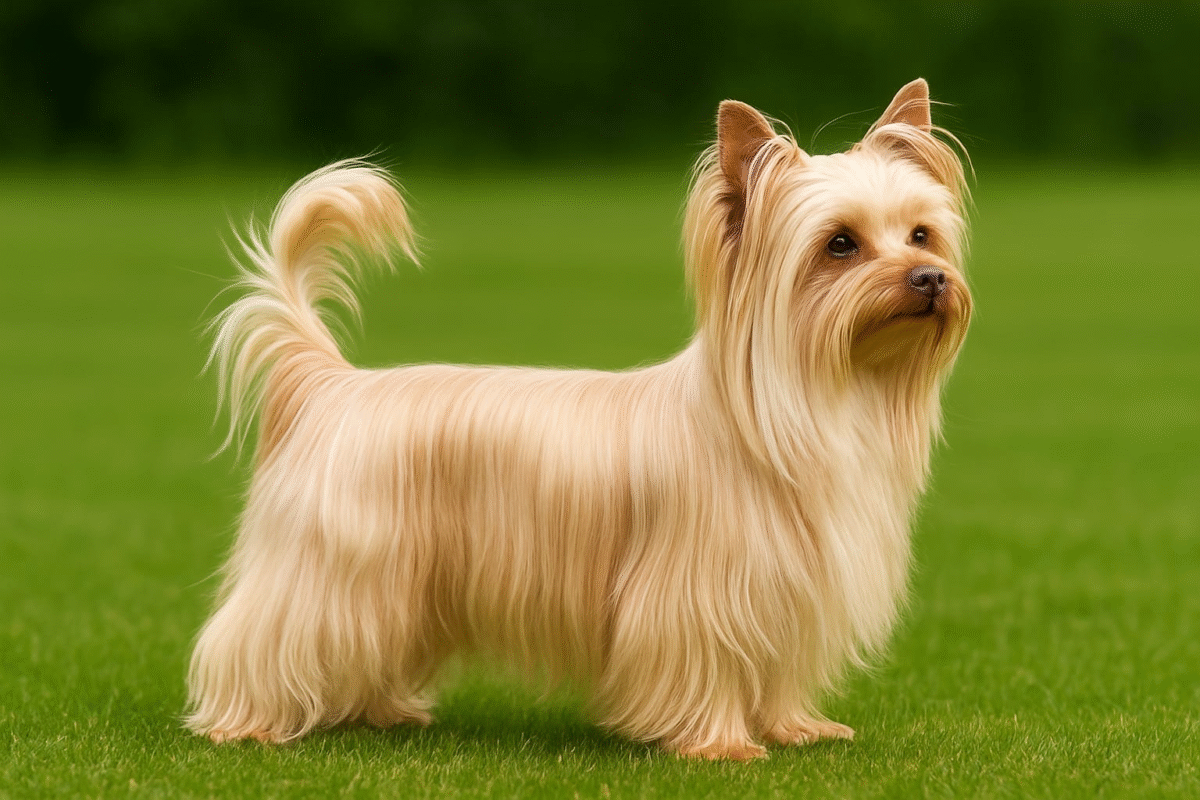
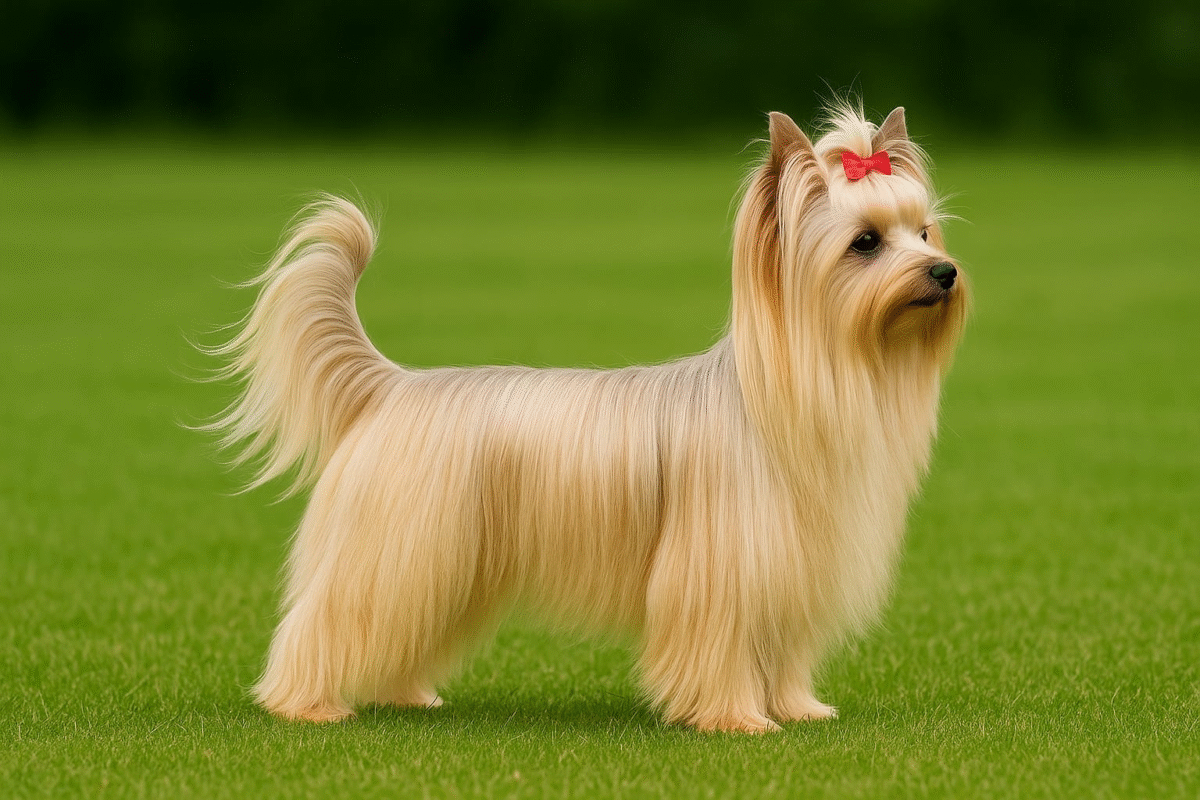
The I-locus influences the intensity of red pigment. Produces warm, golden or pale blonde coats.
7. Black – Locus K (Dominant Black)
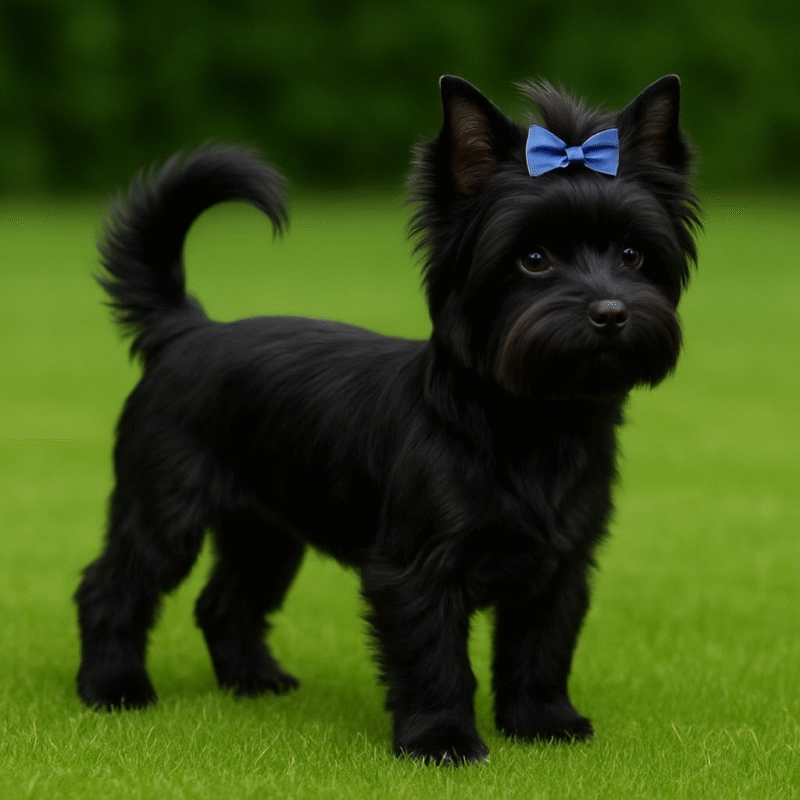
The dominant K allele can create a solid black phenotype. Rare in the Yorkshire Terrier.
8. Merle – Locus M (Merle Variants)
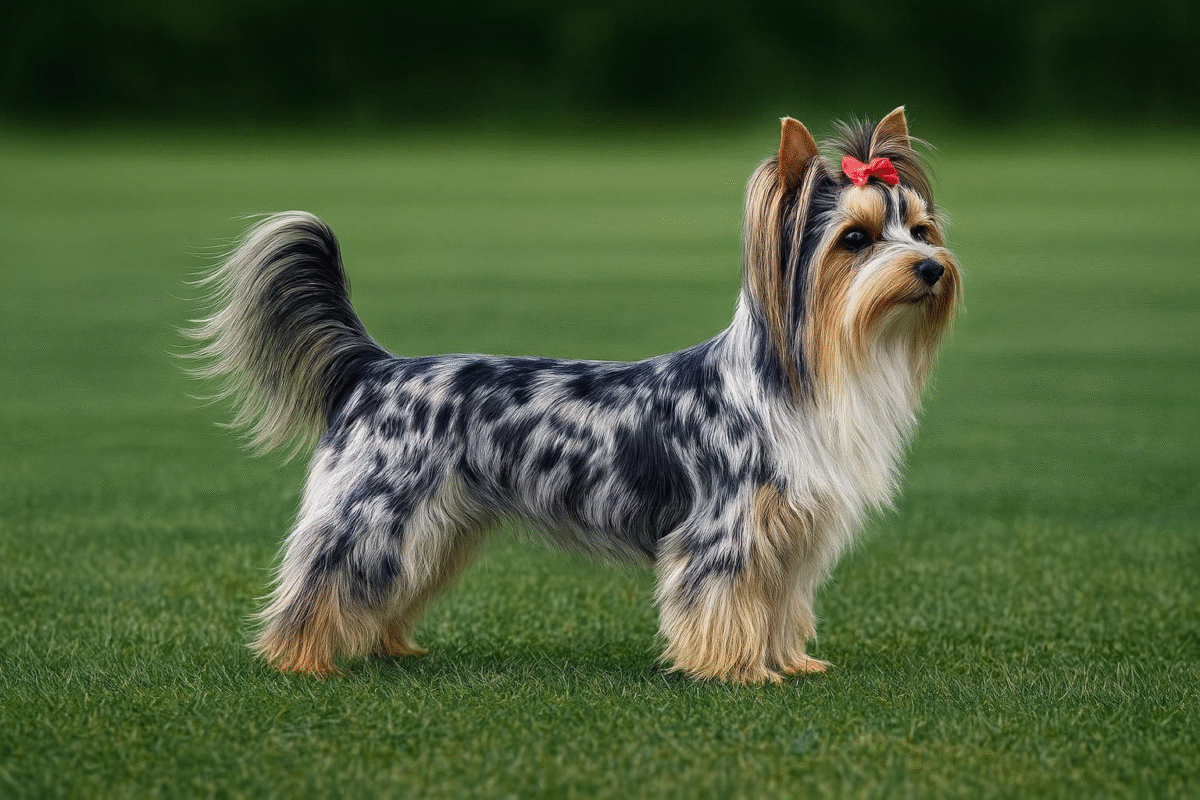
Classic, Atypical, Cryptic (Mc), Harlequin.
A striking pattern, but requires careful genetic assessment due to hidden or subtle forms.
9. Biewer / Parti – Locus S (Piebald)
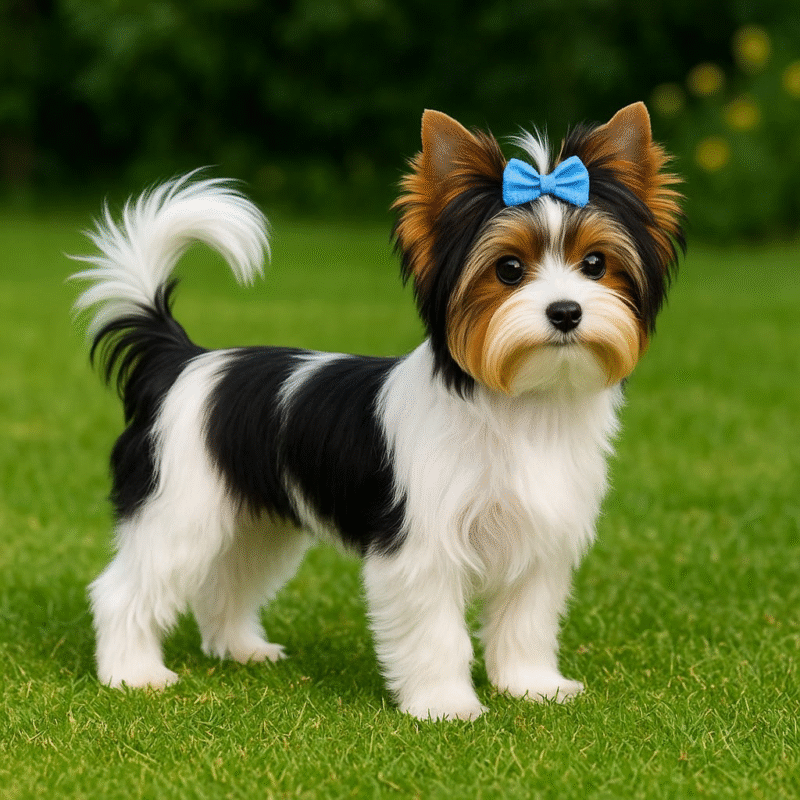
The sp/sp genotype creates the white-marked Biewer or Parti pattern. Appears as white patches combined with black–tan, chocolate, or gold.
Why is genetic testing important for Yorkshire Terriers?
Due to the breed’s diverse colours and inherited patterns, genetic testing is highly recommended.
Understanding the dog’s genetic background supports responsible breeding and the safe preservation of rarer coat variations.
The Yorkshire Terrier in the modern world
Today, the Yorkie is much more than a companion dog:
- emotional support animal
- therapy dog
- ideal companion for children and seniors
- vigilant home guardian
- intelligent and easily trainable partner
Its adaptability makes it an excellent choice for both apartments and houses with gardens.
What is the ideal size?
According to the breed standard, the ideal adult weight is:
2–3.2 kg
Responsible breeding focuses on:
- balanced structure
- healthy proportions
- stable genetic background
rather than breeding for extreme mini sizes.
Closing Thoughts
The Yorkshire Terrier may be small and elegant, but it carries a huge heart.
It is intelligent, affectionate, playful, and full of life — a breed that has earned its place among the world’s favourites.
Genetic testing helps preserve both the health and the beautiful diversity of this remarkable breed for future generations.
This list is not complete — many additional colour types and genetic variations are found in the breed.